Uniforms, workwear & team apparel
Patches, name tapes, lettering, numbers and striping placed consistently from XXS to 5XL.
Give your existing workstation or equipment panel the ability to see, measure and guide. Plitzie uses computer vision to project placements onto real parts, check finished work, and turn analog gauges into automatic readings—right where the work happens.
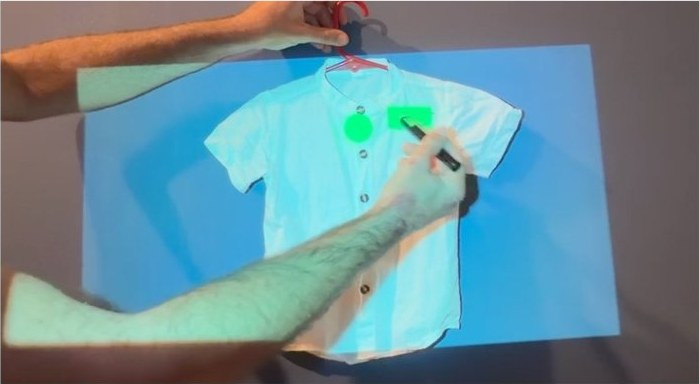
Measure the item. Project the placement. Check the finished work.
From an operator’s table to an equipment panel, the approach is the same: use a camera to understand what’s in front of it, then turn that view into useful guidance or data.
Mount the system into dirty, noisy, signal-denied environments.
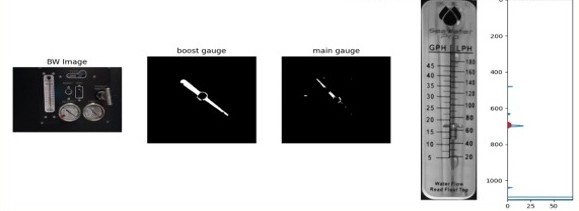
Computer vision measures the item’s size, outline and position, or finds the needles and floats on your gauges.
Project the order’s placement specs onto the part, or convert needle angles and float positions into readings.
Check finished placements against the spec, or read equipment panels automatically instead of relying on clipboard rounds.
Guided placement, visual inspection and equipment monitoring for customized products and the lines that make them.
Patches, name tapes, lettering, numbers and striping placed consistently from XXS to 5XL.
Regulation insignia, flags and identifiers in the right place on every size.
Mounts, antennas, labels and payload positions across changing configurations and variants.
Guided component placement and marking when specs change from build to build.
Cutouts, hardware, graphics and lettering on one-off enclosures, sheet metal and fire apparatus.
Measure the finished item and overlay the spec to confirm placement before it ships.
Built for water treatment and desalination skids, compressors and pneumatic systems, hydraulic test stands, pumps and process lines, and legacy equipment monitored with analog gauges.
Try a short pilot on a real product line or piece of equipment. Tell us what you place, mark or monitor, and we can discuss a practical starting point.
The projection system mounts above an existing table or station. No line rebuild is needed.
A camera measures the item’s size, outline and position as it arrives, then the placement specs are scaled to the measured item.
Anything that can be converted into a pattern or number.
The system projects placement shapes onto fabric, metal and composite surfaces.
Yes. It is derived from systems used inside pipelines, so a factory is no issue.
Yes. The same system can check the finished item against the placement spec before it ships.
No. An ordinary camera reads your existing gauges and flow meters without replacing instruments or rewiring the panel.
Almost any gauge that has a visible reading.